




Top 5 Richest People in the World: What They Own, How They Got There
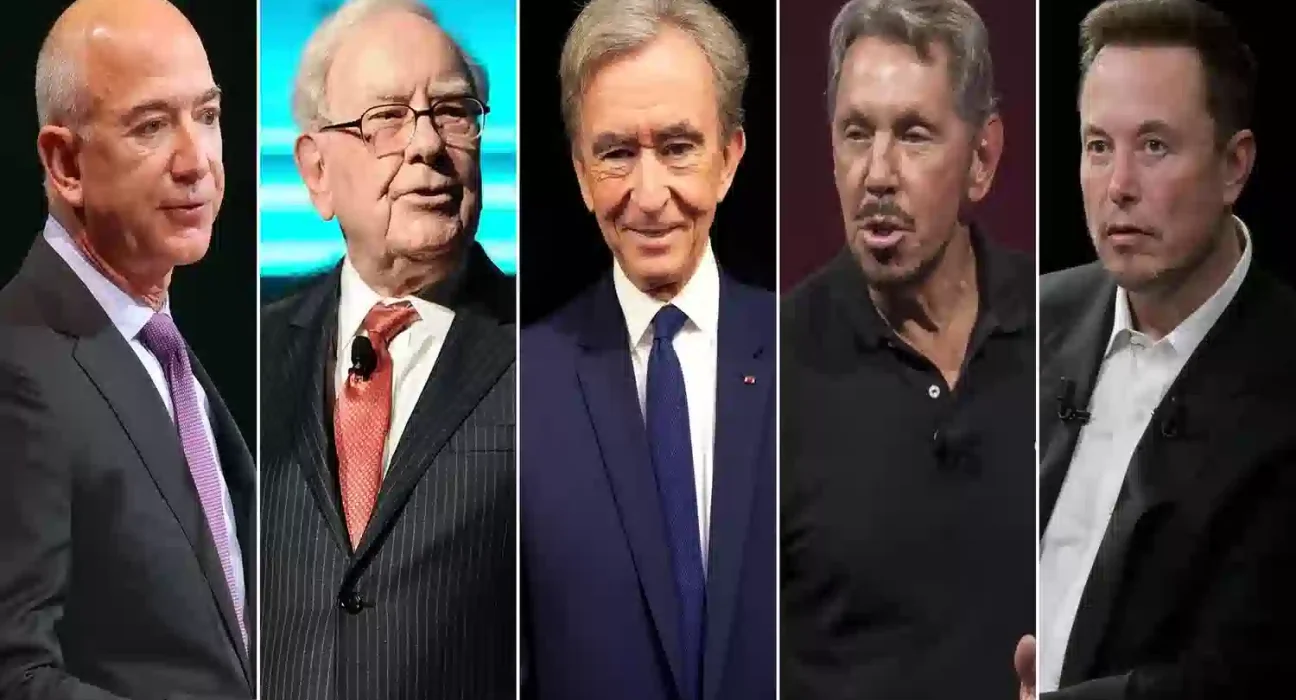
As of May 2026, Elon Musk continues to lead the top 5 richest people in the world with a net worth that has recently surged past $700 billion, followed by tech titans like Larry Page, Jeff Bezos, and Mark Zuckerberg. These numbers shift daily based on stock prices—especially with the explosive growth in AI and aerospace sectors—but the names at the very top remains a relatively exclusive club of industry leaders.
What’s more interesting than the numbers is how they got there – and what they actually own. Here’s a proper breakdown.
The Top 5 at a Glance
| Rank | Name | Est. Net Worth | Primary Wealth Source | Country |
| 1 | Elon Musk | ~$300-340B | Tesla, SpaceX, xAI, X (Twitter) | USA |
| 2 | Jeff Bezos | ~$220-240B | Amazon, Blue Origin, investments | USA |
| 3 | Mark Zuckerberg | ~$190-210B | Meta (Facebook, Instagram, WhatsApp) | USA |
| 4 | Larry Ellison | ~$170-190B | Oracle Corporation | USA |
| 5 | Bill Gates | ~$130-160B | Microsoft (legacy), investments, foundations | USA |
Figures are approximate and based on Bloomberg Billionaires Index and Forbes Real-Time data. Rankings can shift week to week based on stock performance.
What Each Person Actually Owns
1. Elon Musk
The majority of Musk’s wealth is tied to Tesla equity – a company he didn’t found but transformed into the world’s most valuable automaker for several years running. SpaceX, privately valued above $200 billion, adds massive unlisted value. His acquisition of Twitter (now X) was controversial but represents a significant asset regardless of its bumpy transition.
xAI, his artificial intelligence company, is already valued above $40 billion. Musk is unusual in that almost none of his wealth is in cash – it’s stock, equity stakes, and paper value that moves dramatically with markets.
2. Jeff Bezos
Bezos stepped down as Amazon CEO in 2021 but still holds a significant equity stake in the company. His wealth has actually grown faster since leaving the day-to-day role, as Amazon’s stock recovered and grew.
Blue Origin, his aerospace company, is his personal moonshot – entirely privately funded. He also owns The Washington Post, a superyacht that made global headlines, and an extensive real estate portfolio across multiple continents.
3. Mark Zuckerberg
Zuckerberg controls Meta through a dual-class share structure that gives him outsized voting power regardless of his exact ownership percentage. Facebook, Instagram, and WhatsApp combined reach over 3 billion daily active users – a platform scale that drives enormous advertising revenue.
His personal interests include jiu-jitsu (he’s competed publicly), Hawaiian ranch land spanning thousands of acres, and the Reality Labs division betting on the metaverse – which has cost Meta billions but remains a core strategic bet.
4. Larry Ellison
Less famous than the others but arguably more consistent. Ellison co-founded Oracle in 1977 and still owns roughly 42% of the company. Oracle’s pivot to cloud services has reinvigorated its valuation significantly over the past five years.
Ellison owns roughly 98% of the Hawaiian island of Lanai – about 88,000 acres – which he purchased for $300 million in 2012. He’s also a major investor in Tesla and a close ally of Elon Musk.
5. Bill Gates
Gates divested most of his Microsoft shares over two decades and channeled much of that into the Bill & Melinda Gates Foundation, the largest private charitable foundation in the world. His current portfolio is managed through Cascade Investment – a holding company with stakes in waste management, hospitality, energy, and other sectors.
Unlike the others on this list, Gates has pledged to give away the majority of his wealth during his lifetime. He remains enormously wealthy partly because the assets keep appreciating faster than he can give them away.
How Wealth at This Scale Is Actually Calculated
| Component | How It’s Counted |
| Public stock holdings | Calculated daily based on current share price × shares owned |
| Private company stakes | Estimated based on last known valuation round (not always current) |
| Real estate & assets | Rarely updated; often undervalued in net worth estimates |
| Cash & liquid assets | Typically a small % of total for ultra-wealthy individuals |
| Debt & obligations | Subtracted, but the ultra-wealthy often have complex leveraged positions |
What They All Have in Common
None of them got rich on a salary. Every person on this list built or co-built a company, held equity through the difficult early years, and benefited from the compounding effect of ownership in high-growth businesses.
- They all made concentrated bets – not diversified portfolios
- They all held equity through massive downturns instead of selling
- They all built leverage – through people, systems, or capital – not just personal effort
- They all had early capital access or exceptional timing (or both)
The Philanthropy Question
There’s an ongoing debate about whether pledging billions to charity while holding tens of billions in appreciating assets is as generous as it sounds. Gates has given more than $60 billion to date. Musk and Bezos have faced criticism for giving comparatively little relative to their wealth.
The math is complicated. When wealth grows faster than giving, net worth still increases year over year – even with large donations. It’s worth knowing that context when headlines celebrate billionaire philanthropy.
Final Thought
The real story behind the world’s richest people isn’t about intelligence or luck alone – it’s about equity ownership in scalable systems. They own pieces of businesses that serve millions or billions of people, and those businesses generate value around the clock whether their owners are working or not.
That model of wealth creation is worth understanding, whatever you think of the people at the top of it.