




Investment Casting Improving Dimensional Accuracy Across Complex Designs
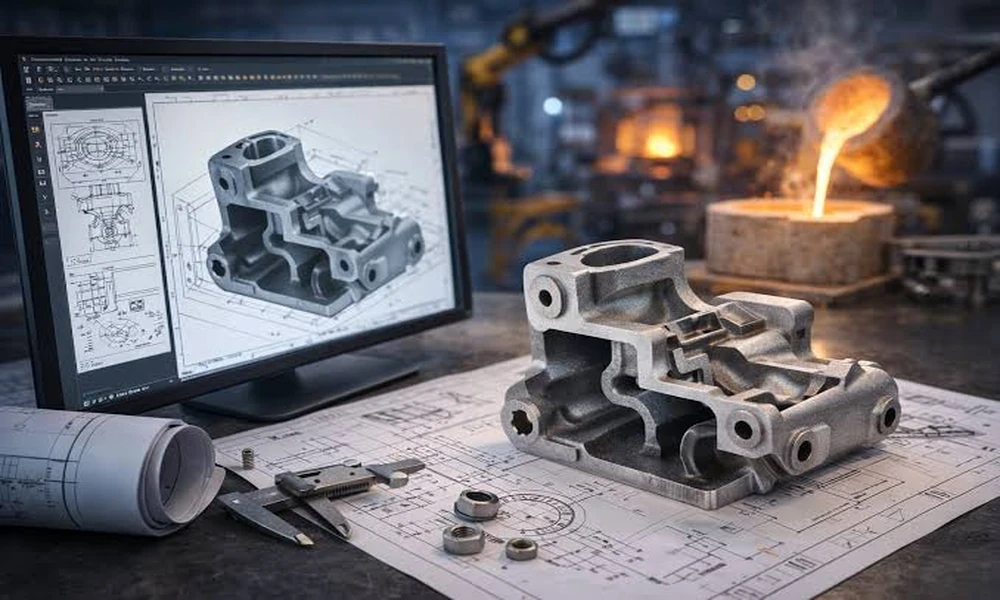
Precision shapes manufacturing choices before production even begins. Complex metal parts require exact dimensions because tiny variations affect assembly, strength, and service life. Investment casting answers those expectations through detailed mold creation and controlled metal flow. Companies selecting thailand investment casting gain access to refined production methods capable of creating intricate components with remarkable consistency across challenging industrial applications.
How Does Investment Casting Preserve Exact Dimensions?
Accuracy begins with an identical wax pattern capturing every design feature. Ceramic layers surround each pattern before molten alloy enters the cavity. Fine details remain intact because the mold reflects intricate geometry closely. Engine housings, valve bodies, and surgical instruments benefit from this controlled manufacturing approach every production cycle.
Precision Relies Beyond Casting AloneExcellent dimensional control depends upon several connected production elements rather than one operation. Material selection influences shrinkage behavior during cooling. Pattern quality determines feature clarity before pouring begins. Inspection confirms each measurement matches engineering expectations. Manufacturers delivering thailand investment casting combine process discipline with experienced technicians, creating components fitting assemblies without unnecessary machining or dimensional correction.Critical Features Behind Accurate Components
Several production details strengthen dimensional consistency across sophisticated metal designs.
- Accurate wax patterns preserve intricate surface geometry.
- Controlled pouring temperatures reduce dimensional variation.
- Stable ceramic shells maintain cavity integrity.
- Precise cooling limits unwanted distortion.
- Final inspections confirm engineering specifications.
Which Designs Benefit Most Today?
Certain components reveal investment casting strengths more clearly than others. Thin sections remain stable without sacrificing detail. Internal passages emerge cleanly within one casting operation. Turbine blades illustrate this capability because aerodynamic surfaces demand exceptional dimensional control. Although machining corrects selected features, excessive removal changes critical tolerances and increases production expense.
Manufacturing Benefits Beyond Tight Tolerances
Dimensional precision creates advantages extending beyond measurement reports.
- Assembly lines experience smoother component fitting.
- Material waste declines across production batches.
- Finishing operations require fewer machining hours.
- Production schedules remain easier to maintain.
Reliable castings strengthen equipment performance throughout extended operating conditions. Consistent dimensions reduce replacement frequency because connected parts experience balanced mechanical contact during continuous service.
Dimensional Accuracy Shapes Finished Component Performance
Factories producing intricate components succeed through dependable dimensional repeatability rather than production volume alone. Ceramic mold accuracy, controlled cooling, and disciplined inspection create measurable performance advantages inside finished equipment. Every precisely formed passage, wall thickness, and mounting surface influences mechanical reliability, proving manufacturing excellence begins long before the first component reaches final assembly.
FAQs
1. Why does investment casting achieve tight dimensional accuracy?
Detailed wax patterns and stable ceramic molds reproduce complex shapes with exceptional precision.
2. Which industries rely upon investment casting most?
Aerospace, automotive, medical, energy, and industrial equipment manufacturers depend upon precise metal components.
3. Does investment casting reduce machining requirements?
Yes. Accurate dimensions leave fewer surfaces requiring secondary machining or finishing operations.
4. Can intricate internal passages be produced successfully?
Yes. Investment casting forms complex internal features within one integrated metal component.